Kenya Safari Vs. South Africa Safari: The Ultimate Guide to Choosing The Right Destination
So, you’ve narrowed down your African safari search to Kenya vs South Africa safari these are two of Africa’s most popular safari destinations. For those planning their first time safari to Africa, and beginning to get to know Africa and best safari destinations, Kenya is not in South Africa, Kenya is an East African country with a ton of magical safari experiences that sets it apart from South Africa tours.
Kenya and South Africa are big 5 safari destinations. Kenya is the birthplace of safaris and is home to the famous Masai Mara National Park, as well as the best place to see the Great Migration River crossings. Elsewhere, South Africa has Kruger National Park and is identified for being very family friendly. South Africa allows visitors to explore beyond safari: historic battlefields; the magic of Cape Town; the winelands; and beautiful scenery along its coastal roads.
Kenya is more safari focused, welcoming more than 2 million visitors, with almost all taking part in a safari as part of their visit, although a share of their number would be the ‘Diani only’ beach crowd. Nevertheless, these are the two most popular African safari destinations for international tourism in sub–Saharan Africa and both offer a wonderful array of options. There are some subtle differences, however, which could help you decide which destination is for you. This guide explains exactly how Kenya and South Africa safaris compare, so you can book the one that fits your safari budget, timeline, and travel style.
Kenya Vs South Africa Wildlife And Density
When it comes to the abundance of wildlife, both South Africa and Kenya are rich, and offer exceptional wildlife safari experiences. This varies deeper when looked into depending on factors such protected safari destinations and the presence of top national parks like Masai Mara in Kenya and Kruger in South Africa.
Both Kenya and South Africa are best for Big Five safaris (i.e., Leopards, Elephants, African buffalo and Rhinos). Masai Mara in Kenya is popularly known for its dense concentration of big cats and for the Laikipia region which is a world-leading area for rhino conservation in Africa. Elsewhere, the Kruger National Park in South Africa has high number of elephants, alongside the other Big Five safari animals, and because this is a larger national park with a varied terrain, all kinds of wildlife can be found here.
At times, it is important to take note that wildlife populations can vary across different regions within each country, not to mention seasons, and it would therefore be wrong to give one a higher general classification than the other. During wildebeest migration safaris in Masai Mara the wildlife concentration is likely to be higher than anywhere else on earth.
When we talk about beach access – the marine life is also important, and South Africa’s access to the whale migration is a huge advantage; Kenya offers dolphins, whales but not on the same level as found in South Africa. Bottom line is, regardless of which country you visit, your wildlife experience will be a good one, so long as you head to the right spots at the right time, making it almost impossible to call, but if I had to, South Africa would get the nod for its consistency and variety.
Kenya Safari Experience
Comparing Climate In Kenya And South Africa
In both South Africa and Kenya, the weather is very predictable, especially when trying to plan around the rainy season. During the dry winter months, there’s less vegetation around, making it much easier to see wildlife in the bush. Additionally, animals tend to gather around water sources, so you’re guaranteed to see game at waterholes and rivers.
Remember that South Africa’s southern regions have dry summers and wet winters instead. The best time to visit Cape Town, for example, is during the peak of summer in December and January. However, northern wilderness areas like Kruger National Park will be hot, wet, and humid during the same period of time, making combination trips difficult. If you do plan to combine a South African safari with a visit to the Western Cape, consider visiting during seasons in autumn and spring.
Kenya has both dry and hot regions, especially along the borders with Ethiopia and Somalia. Elsewhere, on high mountains like Mount Kenya and Mount Elgon can be bitterly cold. With Kenya lying on the Equator, many of the country’s major cities are over 1,000m asl, meaning they experience dramatic temperature swings each day. Meanwhile, the climate along the coastline is tropical, bringing rain and heat for much of the year. This is a key difference to consider when comparing a safari in Kenya vs South Africa.
South Africa Safari Experience
Kenya Vs South Africa Safari Experiences
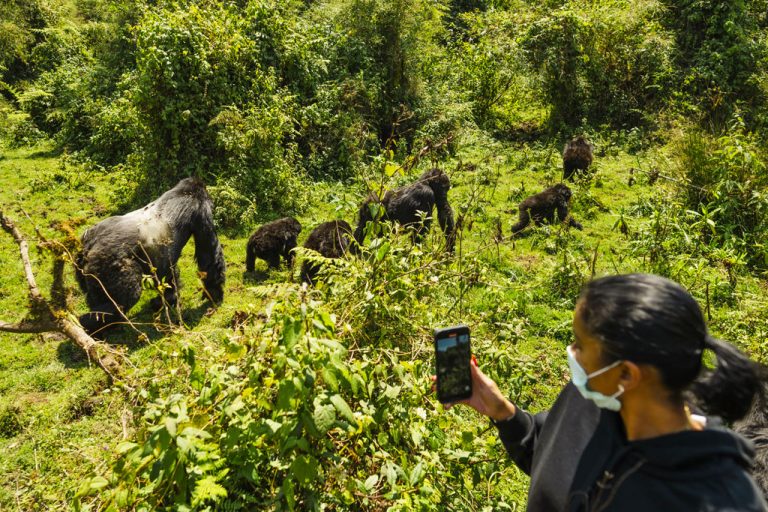
Apart from the game viewing drives in a 4X4 safari vehicle, there is a wider selection of activities available with a greater emphasis on getting out of the safari vehicle to participate on foot in Walking Safaris or atop a horse in Horse riding Safaris, or maybe even get involved with local communities or anti-poaching programmes nowadays in form of wildlife conservation.
As you might expect, both Kenya and South Africa lead in terms of what you can do on safari. Choices available to pick from: camel safaris, bush walks, night drives, hot air balloons, bush baths, overnight sleep outs, canoe safaris, hides, cultural and anti-poaching experiences, and of course, the traditional game drives.
Bush walks, night safari drives, wildlife photography hideouts, authentic cultural interactions, and game drives you can do in both countries, not everywhere, but you will be able to find somewhere to do them. South Africa has numerous lodges that offer a ‘sleep out experience’ where you pack an overnight bag and are dropped at a secure platform about a 10-15 minutes’ drive from the lodge. Here you will spend the night out under the stars, armed with a radio and a goodie hamper filled with your dinner and generally a substantial amount of alcohol to help with the nerves. These experiences are completely safe and offer you the chance to have your Boy Scout moment and sleep out under the stars, albeit in comfort. Kenya tends not to offer these as much, possibly because most accommodation is tented anyway.
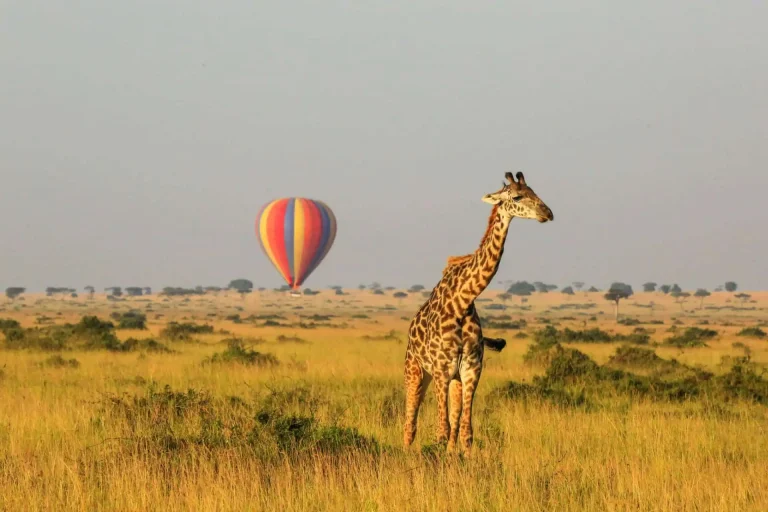
Hot Air Balloon safaris is an activity that is much more popular in East Africa. Kenya offers hot air ballooning in the Masai Mara and in Amboseli. If this is an activity you want to do, then it’s much more likely you will come across it in Kenya and not in South Africa because it is less frequented by safari goers.
In the Masai Mara and Amboseli, there exist huge plains where landing a balloon is much easier than finding your spot amongst the denser bush, and the winds tend to be fairly reliable and consistent, but it does incur an early start, so be warned.
South Africa Vs Kenya Luxury Accommodations
When comparing luxury safari accommodations in Kenya and South Africa, there are some notable similarities and differences to consider. Both countries offer luxurious options for travellers, but there are differences in terms of overall safari atmosphere and style.
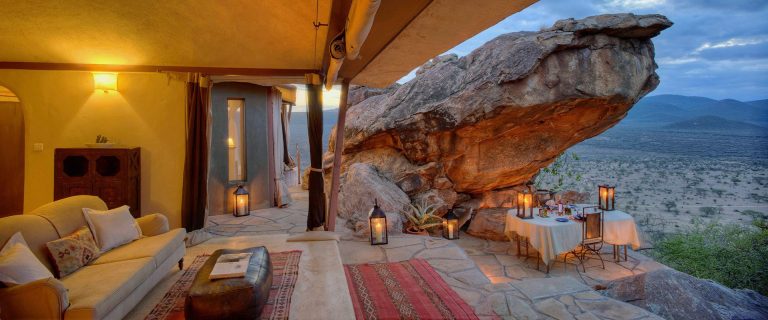
In Kenya, luxury safari accommodations, lodges and camps are designed to blend harmoniously with the natural surroundings while providing a comfortable and opulent retreat for guests. Most are stretched tented camps offering spacious suites, featuring private verandas or decks with breath-taking views of the plains or watering holes. Accommodation in Kenya often emphasises eco-friendly practices and provides opportunities for authentic cultural interactions with local communities.
Elsewhere, the luxury safari accommodations in South Africa are often architecturally stunning, combining contemporary design with traditional African elements. South Africa offers a range of accommodations, from lavish suites with private plunge pools to exclusive-use villas, providing a very secluded and intimate experience.
South Africa Vs Kenya Safari Costs
Both Kenya and South Africa offer a wide range of costs for their safaris, some surprisingly so, considering the local standard of living. The biggest difference is the currency they are priced in and how that is trading against the currency you are paying in. Kenya charges safaris in USD, whereas South Africa is priced in South African Rand. You will find some tour operators charging South African safaris in GBP, and the exchange rate difference between GBP and Rand or USD could save you a significant amount.
Another notable difference is the parks or conservancy fees. In Kenya, when you visit private conservancies, you will pay in excess of USD100 per person per day. Private conservancies tend to be less in South Africa, meaning that if you are on a budget or a longer safari, this could shape your decision. From a buyer’s perspective, South Africa wins when it comes to safari pricing.
In terms of safari pricing, a Kenya safari is generally more expensive per day than a South Africa safari. That said, there are other aspects to consider on this because both safari countries offer tours all the way up to high-end luxury safari experiences, therefore the word so “MORE EXPENSIVE” depends on which level of tour you’re comparing.
Beyond the day-to-day safari rates, both countries carry hidden safari costs worth budgeting for, example international flights, safari tips for guides and camp staff, travel insurance, and pre-trip vaccinations.
South Africa Vs Kenya Safari Accessibility
When it comes to booking flights for your safari to Kenya or South Africa, the good news here, both countries are easy to access with direct flights from the UK to Kenya or UK to South Africa, and only an hour or two-time difference for both, meaning no jetlag.
Once you are in the country, Kenya has a great network of internal flights to the various safari parks , making air travel quick and easy, and in South Africa, the Kruger is a short hop from Johannesburg or an easy drive.
Both safari countries provide straightforward access to national parks.
Checking flight times to Kenya vs. South Africa, Kenya Airways now operates nonstop flights between New York and Nairobi, with a flying time of roughly 14 hours 45 minutes to 15 hours. South African Airways discontinued its nonstop US route, so travelers flying from New York to Johannesburg today typically connect through London or Nairobi, with total journey times of about 19 hours 35 minutes to 20 hours 5 minutes.
South Africa Vs Kenya Big Five Safaris
Kenya vs South Africa, which is better for safari? There’s no clear winner between South Africa and Kenya when it comes to big five safaris. Both countries are home to several Big Five parks and offer incredible safari experiences. South Africa, particularly the Kruger National Park and its surrounding private reserves like Sabi Sands and Timbavati, is famous for its high-density wildlife and the incredible consistency of Big Five encounters.
Kenya is also a Big Five safari destination, with vast savannah landscapes creating a classic safari experience in Masai Mara, Samburu, Laikipia, Amboseli, and Tsavo National Parks.
South Africa Vs Kenya Big Cat Safaris
You can see lions, leopards, and cheetahs in both South Africa and Kenya. However, when it comes to leopard sightings, it’s hard to beat Kruger National Park and Sabi Sand Game Reserve, in specific. This private game reserve that borders the western side of Kruger, is considered one of the best places in South Africa to see these big cats in the wild.
Kenya is a top destination for big cat safaris, as it has impressive populations of lions, cheetahs, and leopards. While the open grasslands of the Masai Mara are perfect for cheetahs, leopards are found in places with denser vegetation, such as Samburu, Laikipia and Tsavo National Parks. Both Kenya and South Africa offer excellent big cat sightings.
South Africa Vs Kenya Birding Safaris
Kenya is a top safari destination for birdwatching safaris, Kenya boasting over 1,100 recorded species thanks to its varying habitats that range from savannahs and forests to wetlands and high-altitude mountains. Popular Kenya birding destinations include Lake Nakuru, famous for its vibrant flocks of flamingos, and the Kakamega Forest, home to unique species like the great blue turaco and Turner’s eremomela – other notable birding hotspots in Kenya include Samburu and Arabuko Sokoke Forest Reserve.
Elsewhere in South Africa, the country boasts a record of approximately 850 bird species, many of which are endemic or near-endemic to the region. Kruger National Park is a popular birdwatching destination, hosting over 500 species, including the sought-after southern ground hornbill and martial eagle. Meanwhile, in coastal areas like the Western Cape, you’ll get the chance to observe seabirds like albatrosses and petrels.
Generally, when it comes to birding tours, Kenya is the better destination.
Wildlife And The Great Migration
The Great Migration is, only seen in Kenya’s Masai Mara ecosystem. South Africa has no seasonal spectacle. If seeing the Migration is what you want, then better visit Kenya.
South Africa does offer year-round Big Five viewing that many travellers find equally rewarding precisely because it is quieter and less driven by peak-season calendars.
Kenya also holds particular worth for those interested in wildlife conservation safaris: Kenya hosts some of the world’s last northern white rhinos (at Ol Pejeta) and has made significant strides with black rhino populations in its conservancies.
Both countries offer the Big Five, lion, leopard, elephant, buffalo and rhino, though the context differs. In Kenya, game viewing happens across open savannah and is often a matter of following large concentrations of animals across wide terrain. In South Africa’s private reserves, game drives tend to be more targeted: guides track specific animals with the help of radio communication between vehicles.
Malaria And Family Safaris In Kenya & South Africa
Although there are no cases of travelers being affected by Malaria, most of Kenya’s safaris require travelers to carry antimalarial prophylaxis. For adults in good health this is rarely a barrier, but for families with very young children, the calculation changes.
South Africa’s major advantage here is the existence of genuinely excellent malaria-free Big Five reserves, primarily in the Eastern and Western Cape. A family can fly into Johannesburg, connect to Port Elizabeth (now Gqeberha) and be on a Big Five game drive the same afternoon, without a single antimalarial tablet. Several of these reserves have also invested specifically in child-friendly infrastructure: dedicated junior ranger programmes, family suites and guides trained to engage younger guests. For families with children under ten or twelve, the malaria-free reserves are often the deciding factor.
All in all, make sure you consult your home doctors before visiting Kenya and South Africa as they will be in the best position to advise you on the medications to bring along on your safari.
Kenya & South Africa Safari & Beach Holiday Combinations
Both Kenya and South Africa easily pair well with a beach holiday extension, though again the charm differs. Kenya beach destinations include Diani Beach, Lamu Island, Watamu Beach & Mombasa Beach which are all reliably warm year-round. The beach extension adds very little travel time: a short domestic or regional flight and you are in a completely different world.
Elsewhere in South Africa, the equivalent is the Cape Town option, genuinely one of the world’s great cities, combining dramatic scenery, the Winelands, extraordinary food culture and Atlantic coast beaches, or the warmer Indian Ocean coast of KwaZulu-Natal, or Mozambique for those willing to add a short flight. Cape Town in particular appeals to travellers for whom an urban cultural experience is as important as the bush itself. Both Kenya and Tanzania add well on a combined bush and beach safari experience.
Kenya & South Africa Safari & Beach Extensions
Both Kenya and South Africa easily pair well with a beach holiday extension, though again the charm differs. Kenya beach destinations include Diani Beach, Lamu Island, Watamu Beach & Mombasa Beach which are all reliably warm year-round. The beach extension adds very little travel time: a short domestic or regional flight and you are in a completely different world.
Visa Requirements For Your Kenya Or South Africa Safari
Kenya requires an Electronic Travel Authorization (eTA) for nearly all foreign visitors, including US, UK, and EU citizens. The standard single-entry eTA costs $30 and typically processes within two to five business days, granting a 90-day stay. US citizens also have the option of a five-year multiple-entry eTA for $185, which is worthwhile for anyone planning repeat trips to East Africa. Our guide on how to get a Kenya visa walks through the application step by step.
South Africa, by contrast, allows visa-free entry for up to 90 days for citizens of the US, UK, Canada, Australia, and most EU countries. This means American and European travelers pay nothing and skip the pre-travel application process entirely for South Africa, while the same travelers must budget time and $30 for Kenya’s eTA. For travelers holding passports from countries that do require a South African visa, the process runs through VFS Global or a South African embassy and can take considerably longer.
Best Time Of Year To Visit Kenya For Safari
The best months for visiting Kenya (and the best time for wildlife viewing) are during the Dry season from June to October. The wildebeest migration usually reaches the Masai Mara in July or August and remains in Kenya throughout September. It starts moving back to Tanzania’s Serengeti National Park around October. Wildlife viewing is good year-round, but this can differ for some parks, depending on the rains. There is a dry spell between the rains in January and February that is also a great time to visit.
Best Time Of Year To Visit South Africa For Safari
The best time to visit South Africa for a wildlife safari is from May to September. During these winter months, the east of the country where the main parks are located experiences its Dry season. Wildlife is easier to spot during the Dry season because vegetation thins, and animals gather around waterholes and rivers. The ‘Kruger & Around’ sections below relate to the parks and reserves in Greater Kruger and in the KwaZulu-Natal province.
Cape Town differs from Kruger and most other parts of South Africa in that most of its rain falls in winter rather than summer. The best time for visiting Cape Town and surrounds is therefore during the dry summer months of October to March. The ‘Cape Town & Around’ sections below apply to the entire Western Cape and nearby parks.
Choose Kenya Safaris If…
Visit Kenya instead of South Africa if you are drawn to the idea of Kenya Wildebeest Migration safaris, endless sky, and savannah scenery, red-dust roads and the sight of wildlife moving across the landscape as it has for millennia. Kenya’s Maasai Mara is the centerstage of the Great Migration, the largest overland wildlife movement on earth, in which approximately 1.5 million wildebeest and hundreds of thousands of zebra and gazelle travel a circuit between Tanzania’s Serengeti and the Masai Mara. The dramatic river crossings, wildebeest plunging into the Mara River to the waiting jaws of crocodiles, are among the most visceral wildlife spectacles anywhere. If witnessing the Migration in its Kenyan chapter is a priority, the window runs roughly from July to October, when the herds are most reliably north of the border.
Kenya is also the top choice for private conservancy safaris, best done here more than anywhere else in Africa. Private conservancies such as Ol Pejeta, Lewa, Laikipia Plateau and the community conservancies bordering the Mara offer something other national parks cannot do: off-road driving, night drives, walking safaris and, in some cases, the chance to visit rhino sanctuaries or meet the Maasai communities whose land management underpins the whole ecosystem. For travellers who want their safari spend to translate directly into conservation and community benefit, Kenya’s conservancy system is deeply compelling.
Choose South Africa Safaris If…
Choose South Africa safaris instead of Kenya if flexibility, urban safari variety and accessibility are your priorities. South Africa’s private game reserves, above all those connecting the vast Kruger National Park in the east, and the malaria-free reserves of the Eastern and Western Cape such as Shamwari, Kwandwe, Amakhala and the Waterberg, offer the Big Five without the health considerations that come with malarial zones.
South Africa is also the easier country for first-time safari travellers. International flights land directly into Johannesburg or Cape Town; road infrastructure is excellent; and the country combines an outstanding safari with experiences that exist nowhere else on the continent, the Cape Winelands, the Garden Route, the dramatic coastal scenery around Cape Town and some of the world’s most celebrated restaurants. A beach-and-bush combination is effortless: fly from the bush to Cape Town for a few days, or continue on to Mozambique or the South African Indian Ocean coast. The logic of South Africa’s geography makes multi-leg itineraries particularly smooth.
Can I Combine Kenya And South Africa In One Trip?
Yes, and for those with 2 to 3 weeks it can be a deeply rewarding combination, particularly for travellers who want to witness the Wildebeest Migration Safari in Kenya and then enjoy a malaria-free extension or Cape Town stay in South Africa. The safari logistics require careful planning and an additional international flight, so it is worth discussing the routing with a specialist to keep travel days to a minimum.
Kenya Or South Africa: Which Safari Is Right For You?
To say one is better than the other would be an inaccurate statement. Both safari countries offer a huge choice of unique safari experiences in their very own landscapes, from the desert lands of the Kalahari in South Africa to the Matthews Mountain Range in Kenya. A safari in Kenya and South Africa destinations will blow your mind.
Kenya offers a wilder and raw safari experience. As an example, the roads are not always great getting from A to B, whereas South Africa always has good, tarred roads right up to the park you are going to and sometimes even in the parks (see Kruger National Park), not that you want it. If we are to choose between Kenya and South Africa, Kenya’s wilder safari feel comes a sense of being more at one with the great outdoors: less light pollution, more stars; fewer communities, wider plains.
Safari Lodges
Best Kenya Safari & Beach Tours
Browse our favorite Kenyan beach holiday packages or simply get in touch with one of our Africa safari experts to help custom-make a Kenyan beach holiday that matches your travel wishes. You can enjoy safaris in Kenya national parks on the mainland, then follow it up with a relaxed beach holiday at Malindi or Diani. Get to know the coastal Kenya, and what’s possible on your trip to these Indian Ocean beaches, discover some of the best-loved experiences and safari routes that we’ve found working particularly well with our travelers.