
Saadani National Park Safari
Remember, all our itineraries are totally flexible and can be changed to suit you.
About Saadani National Park: The Ultimate Safari Guide
Saadani (1,062 sq km) is the only National Park in East Africa where you can be enjoying wildlife at one moment, including big game species such as elephant, buffalo, lion, giraffe, roan etc. and then the next be walking along a sandy beach and swimming in the surf of the Indian Ocean.
It is a place where you will encounter large and small mammals, birds and reptiles including Roosevelt’s sable antelope; the mangrove forests around the winding Wami river, ocean, clumps of palm trees, coral reefs and the beaches along the shores of Indian ocean forming one and only breeding sites for green turtles in Tanzania national parks’ system.
There are about 8 km of sea front and of these at least 3 km are unspoilt beaches. The undisturbed nature of the beaches makes it a favourite place for green turtles to lay their eggs and this beach is the most important breeding site for turtles in all of Tanzania.
The terrain is mostly flat but with a wide variety of vegetation types, including broad leafed woodlands (Miombo), extensive areas of open plains with scattered trees, dense riparian vegetation and mangroves. There are palm trees along parts of the coastal beaches.
The Wami River meanders slowly through mangrove forests in the southern part and can be enjoyed by boat or canoe. Both hippo and crocodiles are found here, as well as hosts of different bird species.
Saadani is warm and humid throughout the year, but enjoys onshore trade wind breezes for most of the year.
“Saadani National Park Guide”
Safari Packages To Saadani National Park
Here’s some of our most popular Saadani National Park safari holidays. If you don’t see what you’re looking for, send us a message below so that we may give you more range of holidays and tours in the destination. Book the best safari to Saadani National Park today.
6 Days | Kenya - Tanzania Photographic Safaris
7 Days | Kenya - Tanzania Photo Tour
8 Days | Kenya - Tanzania Photography Safaris
10 Days | Kenya - Tanzania Safaris
10 Days | Kenya - Tanzania Safaris
10 Days | Kenya - Tanzania Safaris
History Of Saadani National Park
Gazetted in 2005 with an area of 1100km2, the Park is situated at the heart of the Bagamoyo, Pangani and Zanzibar towns that once was the market place for slave trade.
Tourist Attractions In Saadani National Park
The Park is home to a variable mix of both marine and mainland flora and fauna most notably waterbucks, giraffes, warthogs, hartebeests, elephants, hippos, crocodiles, water birds. Also the superb scenic beauty of marine – terrestrial interface and the natural Mafui sandbank.
1. Wami River
Wami River passes through Saadani and empties into the Indian ocean. It hosts a large population of hippos, crocodiles, flamingos and many water bird species. Plan to see the Elephants bathing and playing in wami river especially on the early hours of the morning.

2. Mangrove Forest
Saadani will provide you with an opportunity to see a varied types of mangroves forest found on the saline water/mud and higher ground of the ocean. These salt tolerant tidal forests will give you an exclusive taste of many animal species including the interesting fiddler crab and prawns.
3. Green Turtles
Madete beach adds an ingredient to your safari that will make it a memorable one. This is where you will be able to see the green turtle breeding site and hatching of the young ones.
4. Wildlife
Wildlife is abundant and varied, with the amount of wildlife being seen increasing since the area became a National park. Species include giraffe, buffalo, warthog, common waterbuck, reedbuck, hartebeest, wildebeest, red duiker, greater kudu, eland, sable antelope, yellow baboon and velvet monkey. Herds of up to 30 elephants are encountered with increasing frequency, and several lion prides are present, together with leopard, spotted hyena and black-backed jackal.
5. Birdlife
Birdlife is spectacular everywhere because not only are there woodland, river, mangrove and plains species, but also sea birds and waders along the beaches and shore line.
Saadani National Park Trips
Things To Do In Saadani National Park
The Park has a wide range of activities that cater for every ones interest.
1. Boat Safari In Saadani Park
One can do boat Safari at the delta of Wami river and the ocean. Boat safaris are relaxing and enjoyable. There is a chance you can spot hippos, crocodiles and many birds and it is interesting to watch the vegetation along the banks of the Wami River change with decreasing salinity of water as you move up the river. Boat safaris is also the best selection to see marine and riverine birds like kingfisher and lesser flamingos.
2. Visit Mafui Sand Bank
This magical island that opens early morning and day and closes in the evening is the best place where lunch and sun bathing can give you maximum relaxation.
3. Bird Watching In Saadani Park
Birding in Saadani is all year around. Migratory birds from Europe and Northern Africa can be found in November to April making this the best time for bird watching. This is also a nesting season for resident birds and many can be spotted in their breeding plumage.
4. Walking Safari In Saadani Park
Walking safari on natural trails of Saadani gets you close to nature and immerse in active game watching. Once you set foot into the vast plains, walk through the thick canopies or landscapes, there is an overwhelming sense of becoming one with nature. You will experience the real thrill as you get to see animals that you may not see when driving. Most walking safaris are ideal in the morning or just before dusk. Depending on the age group, you can enjoy gentle strolls up to two hours, half day or full day excursion.
5. Morning & Afternoon Game Drive In Saadani Park
This activity will reward you with glimpse of elephants, hippos, lions, giraffe, zebra, warthog, buffalo, leopard, hyenas to mention a few.
6. Mafui Sand Bank
Visit Mafui sand bank island that opens during the day and closes in the evening, a sand bank where you snorkel in the caves with colourful fish and green turtles. A place where lunch and sun bathing can can give you maximum relaxation
When To Visit Saadani National Park
The best time to visit Saadani National Park is after the rains, in January and February – in the dry spell between the short and long rains and from June to August – the opening months of the Dry season. This is when animals use the water pooled on the plains to hydrate. The birdlife is most spectacular in the Wet season. During the green season of November and December and March – May some parts will be inaccessible in Saadani Park.
Visit Saadani National Park
Animals & Wildlife In Saadani National Park
Although Saadani Park wildlife numbers are increasing slowly. Animals you are likely to see on a game drive include giraffe, buffalo, common waterbuck, Lichtenstein’s hartebeest and yellow baboon. Also look out for bohor reedbuck, wildebeest, zebra, greater kudu and eland. Big elephant herds roaming the savannah make for incredible sightings. Saadani hosts a small population of Roosevelt’s sable, an endangered species found otherwise only in Nyerere National Park and Kenya’s Shimba Hills National Reserve. Another coastal special is the tiny red duiker, often seen scurrying away in the undergrowth. The beaches in and around Saadani form one of the last major breeding sites in Tanzania for green turtles. Boat trips on the mangrove-lined Wami River offer a chance to see the acrobatic Angolan colobus monkey.
Best Time For Wildlife Viewing In Saadani National Park
The Saadani National Park is open all year round, but the access roads are sometimes impassable during April and May. The best wildlife viewing is after the rains, in January and February and from June to August, when there is still plenty of water on the plains and the wildlife stays within the park.
Saadani Wildlife Safaris
Best Reasons To Visit Saadani National Park
The Only Safari Park With Its Own Ocean: Walking safaris that begin in the savannah and end at the edge of the Indian Ocean, an experience that exists at no other national park in East Africa.
The Wami River At Its Most Atmospheric: Drifting upstream past hippo pods and basking Nile crocodiles, with flamingos picking through the shallows and mangroves lining a river that flows almost to the sea.
Wildlife Encounters Without The Crowds: Four of the Big Five in a park that sees a fraction of the visitor numbers of Tanzania’s northern circuit, making each sighting feel unhurried in a way that few parks can offer.
Rare Coastal Species: The shy red duiker inhabits Saadani’s coastal scrub, rarely encountered elsewhere in Tanzania. The endangered Roosevelt’s sable and beach-nesting green turtles complete a wildlife profile tied to this rare habitat.
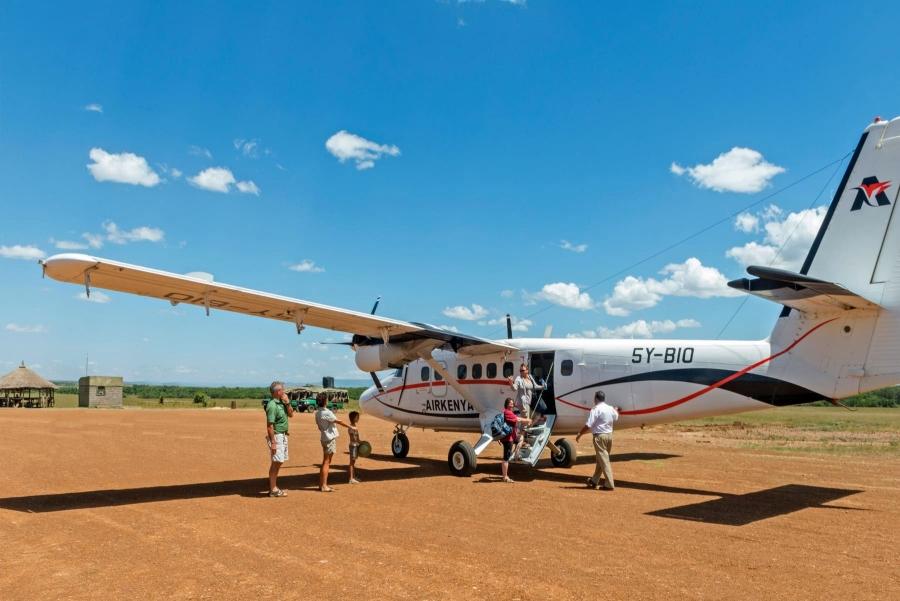
Accessibility: Saadani sits within a short charter flight of both Zanzibar and Dar es Salaam, the most natural bridge between Tanzania’s safari interior and its Swahili Coast.
A Safari In Saadani National Park
Saadani National Park Scenery & Landscape
In Saadani Park, the mangroves separate the idyllic palm-lined beaches, and the watercourses are fringed by woodland. The habitat inside the park is mostly grassland interspersed with acacia thickets. Part of the extensive Zaraninge coastal forest, a biodiversity hot spot in Tanzania, is also located within the park boundaries.
Saadani National Park Holiday
Best Months To Visit Saadani National Park
The best time for watching wildlife in Saadani National Park is after the rains, in January and February and from June to August, when there is still plenty of water on the plains and wildlife stays within the park. For a general bush or beach break away from the city, Saadani Park is good to visit most of the year, except during the peak of the rains from April to May.
Visiting Saadani National Park In The Dry Season
The best time to visit Saadani National Park is during the dry season, from June to October. At this time, the weather is sunny and dry, making it easier to explore the park. Roads are in better condition, animals gather near water sources, and it becomes easier to spot elephants, giraffes, antelopes, and predators on game drives. The beaches are also cleaner and more enjoyable for swimming and relaxation. For visitors who want to enjoy both wildlife viewing and a beach holiday, this season is the most comfortable and rewarding.
Safari To Saadani National Park In The Wet Season
The wet season in Saadani, from November to May, also has its own beauty. The park turns green and fresh, with plenty of flowers and lush vegetation. This is the best time for birdwatchers, as migratory birds arrive in large numbers. Although some roads can be muddy and harder to drive, the scenery is very beautiful and peaceful with fewer tourists. Between June and August, sea turtles come to the beaches to lay eggs, which is a special attraction for nature lovers. So, while the dry season is the easiest time for most visitors, the wet season is great for those who enjoy greenery, birds, and a quieter experience.
Kenya & Tanzania Safari Packages
Then customise yours with an expert.
Our listed Kenya and Tanzania safari packages are chosen to inspire and enlighten you – they show how top attraction destinations can work together in an itinerary. From the best 10-Day Kenya and Tanzania safari itinerary, when it comes to planning African vacations, we’re the tailor-made travel specialists. An African Safari Expert will customize your vacation, shaping it around your individual wants and preferences.
9 Days | 8 Nights
Best Air Safaris
Climate & Weather In Saadani National Park
The Park receives a bimodal pattern with rainfall peaks from March to June and short ones from October to November. From June to September and January to February are the best time to visit with average maximum temperatures reaching up to 29c.
Birds & Birding Safaris In Saadani National Park
Saadani National Park offers excellent birding tours in a variety of habitats. Boat trips on the mangrove-lined Wami River are great for marine and riverine birds, including mangrove kingfisher, while the nearby salt ponds often host large flocks of greater and lesser flamingo. Inland, you’ll see many grassland species and you should look out for raptors such as bateleur, brown snake eagle and eastern chanting goshawk. Migratory birds are present from November to April.
Popular birds in Saadani Park include the following; African cuckoo hawk, African skimmer, Eastern paradise whydah, Greater flamingo, Lanner falcon, Lesser flamingo, Lesser kestrel, Little bittern, Long-crested eagle, Mangrove kingfisher, Pel’s fishing-owl, Pied avocet, Straw-tailed whydah, and Trumpeter hornbill.
Best Time For Bird Watching In Saadani National Park
Birding holidays in Saadani is good year-round. Palearctic and intra-African migratory birds can be found from November to April, making this the best time for bird watching. Additionally, this is nesting season for resident birds, and many can be spotted in their breeding plumage.
Saadani National Park Safety Tips
A trip to Saadani National Park is very safe in our opinion. Crime within Tanzania’s parks and reserves is rare, and your guide will help to keep you safe. During your Saadani National Park holiday, your safari guide will look after your safety. Always listen carefully to their instructions and follow the park rules. Saadani National Park wildlife viewing is generally very safe. Our professional guide will ensure your safety on a guided safari. Below are some general safety tips for Saadani holiday safaris:
Always keep your voice down when close to animals
Stay in the car during game drives except at designated areas where you are allowed to get out
Don’t stand up in the car, hang out of the window or sit on the roof
Stay together as a group close to your guide on a walking safari and always walk in single file
Never run or jog in a wildlife area as it entices predators to attack
Never walk between a hippo and water; it may panic and charge because its safety route to the water is blocked
Never leave food in your tent; it will attract wildlife
Cover your arms and legs in the evening and use insect repellent to protect against mosquitoes
Wear a hat, use sunscreen and drink plenty of water
Don’t wear bright and colorful clothes or too much perfume, especially on walking safaris
In tsetse-fly areas it is recommended not to wear dark-colored clothing, such as black or dark blue, since it attracts these stinging flies
Bring warm clothes for morning game drives in open vehicles
Saadani National Park Safari Ideas
Saadani is a wonderful place to unwind and relax after visiting other places in the country. On visit to Saadani, one can choose to visit Caravan serai and Nyerere first house in Magomeni Usalama, located a mere four kilometres from the heartland of Dar es Salaam. In this house Mwl. Nyerere hosted meetings of the Tanganyika African Association (TAA) and (its successor) the Tanganyika African National Union (TANU). The building is testament to the history of the struggle for independence in Tanganyika. Therefore, the house is now part of Mwl. JK Nyerere Memorial Museum.
Questions About Best Saadani National Park Safaris
Q. What Wildlife Can I See In Saadani National Park?
Four of the Big Five animals- lion, elephant, buffalo and leopard are all present, with populations recovering since gazettement. Elephants are occasionally spotted on the beach itself, an encounter specific to Saadani and found at no other national park in East Africa.
Herbivores: Masai giraffe, waterbuck, bohor reedbuck, Lichtenstein’s hartebeest, wildebeest, warthog, yellow baboon, and zebra move through the open grasslands year-round, with giraffe among the most consistently sighted species. Also look out for red duiker and the endangered Roosevelt’s sable.
Wami River animals: Hippos and Nile crocodiles inhabit the river in observable numbers year-round; flamingos and pelicans congregate along the banks, making the river corridor one of the park’s most reliably rewarding wildlife areas.
Green turtles and marine life: Green turtles nest on Saadani’s beaches, with Saadani Safari Lodge running a turtle monitoring and protection project along the coast; dolphins are possible sightings on offshore boat trips, particularly between June and September.
About 400 bird species, including mangrove kingfisher, Pel’s fishing-owl, Sokoke pipit, African fish eagle, lesser and greater flamingos, goliath heron, little bittern, trumpeter hornbill, southern ground-hornbill and palm-nut vulture.
Q. Can I See The Big Five In Saadani Park?
No, only four of the Big Five are present: lions, elephants, buffalo and leopards. Rhinos do not occur in the park. Wildlife populations have been recovering since Saadani was gazetted as a national park in 2005.
Q. How Many Days Should I Spend In Saadani National Park?
Two to four nights suits most itineraries, with three nights the recommended minimum for a meaningful combination of game drives, a Wami River boat safari and beach time. Saadani works best as part of a broader Tanzania journey.
Q. How Much Does A Saadani Safari Cost?
Saadani safaris typically cost from US$300 per person per night at Simply Saadani Camp and from US$450 per person per night at Saadani Safari Lodge, depending on accommodation comfort level, time of year, and activities. This price usually includes accommodation, all meals, activities, experienced guides, and 24/7 support from our team.
Saadani National Park Safari Planning
Q. What type of clothes do I wear on Saadani National Park safari?
Pack lightweight, comfortable, and casual clothing for Saadani National Park safari, including long sleeves, pants, comfortable closed-toe shoes, a wide-brimmed hat, and layers for cooler mornings and evenings on game drives. For more details, we suggest you do your own safari packing essentials and find out what fits your interests.
Browse our safari clothing packing advice on what to pack for your African tour:
- Lightweight trousers /shorts and t-shirts remain ideal for the daytime drives.
- Lightweight jacket / fleece for the early mornings and evenings.
- Remember to also pack some warm socks and a woolly hat would be suggested for early morning and evening game drives.
- Hiking shoes
Other items we would suggest you bring along with you include:
- Sunscreen glasses & hat/cap
- Comfy Shoes / Sandals
- Flip Flops to wear during the day
- A Torch / Lamp
- Binoculars
- Phone/laptop charger
- Pack your medication, and a spare set of spectacles or contact lenses if you wear these.
Q. What is the best time to see the Masai Mara wildebeest migration in Kenya?
The best time to witness the dramatic Masai Mara wildebeest migration in Kenya is typically between mid-July through mid-September where your chances of witnessing a river crossing are generally much higher. In early October marks the end of the herd crossing the river from Kenya down into Tanzania, as thunderstorms begin in the north the herds will embark on their return journey back to the Serengeti.
Checkout our Migration safari offers.
Q. Kenya Vs Tanzania: Which Is Better for an African Safari?
Choosing between Kenya and Tanzania for an African safari depends on personal preferences, BUT Kenya is the most chosen being cost & budget friendly during both high and low seasons. Secondly, when it comes to the best places to stay in Kenya and Tanzania, both destinations offer fantastic accommodations. Thirdly in terms of Big 5 sightings, the wildebeest migration & general game viewing, both destinations are safari heavyweights. In terms of privacy and extending your safari beyond game drives, there are more private conservancies in Kenya than Tanzania which offer you plenty of activities inside the park.
Lastly, Kenya safari is the most sought-after destination for the world’s best safari experiences, evident from the large number of celebrities visiting year in year out.
Q. Will I have a private vehicle or shared game drives with other people?
We tend to enforce a maximum person per vehicle policy of 6. Meaning, although you’ll be sharing with other guests, everyone will get a side-view seat with unhindered views.
Some trips are designed in such a way that a private vehicle and guide are included for a portion of the trip, but the use of a private vehicle throughout your safari comes at an additional cost.
Q. How many days do you need for an Africa safari?
The ideal duration for an East Africa safari package often ranges from 5 to 14 days, this allows you to enjoy a comfortable and a well-rounded rewarding safari experience during this African tour package. It also depends on the destinations you will visit, wildlife interests, and personal preferences.
Q. What do I do in case of an emergency?
We have a 24 hour emergency line. If anything goes south, we’re ready to assist you regardless of time or date.
Q. Are there malaria mosquito nets in Africa safari tented camps?
Many tented camps in Africa provide fitted mosquito nets in all rooms which are also insect proofed to protect you against malaria mosquito bites and other insect bites, ensuring a comfortable and safe stay.
It’s also advisable to carry insect repellent to further protect yourself especially in the outdoors during evenings.
Q. Is there Wi-Fi at the safari lodges & tented camps on safari?
Almost all Africa safari lodges and tented camp accommodations during your safari provide free Wi-Fi. You’ll find this available in all three accommodation levels – comfort or luxury accommodations.
Wi-Fi is provided in the public areas of the safari lodges/tented camps including the reception, dining areas, and lounge. It is not provided in the individual rooms/tents.
Moreover, because you will be inside a wilderness park, we still request that you come prepared with your own network data to avoid any inconveniences.
Saadani Safari Payment Methods
Q. Do you provide drinking water on safari?
East Africa is within the tropics and near the Equator, separating the northern and southern hemispheres. The tropical temperatures are relatively high on the safari route and even within the national parks/game reserves.
Because you’ll need to frequently hydrate during your safari, we ensure unlimited supplies of drinking water.
All Vulture Africa Safari vehicles are fitted with a cooler box or mini fridge with a constant supply of cool, bottled water.
We replenish our supplies of drinking water during stops along the safari route.
Here’s everything you need to know about packing for your Africa safari trip.
Q. Are mosquito nets provided in safari lodge rooms/tents?
We carefully research and choose our selection of top safari lodges and tented camps to offer the best in terms of comfort, relaxation, amenities, and atmosphere during your safari.
We fully understand the need for your protection against mosquitos and other insects.
All rooms/tents during your safari are fitted with mosquito nets or are insect-proofed to protect you against bites.
Tented camp showing bedroom with mosquito nets
You are also advised to use insect repellent to further protect yourself especially outdoors in the evenings.
Q. Is it possible to store excess luggage while on safari?
Vulture African Safaris understands that your holiday travel may be lengthy and could involve different activities during your trip. You may find the need to store some of your luggage at various times.
You can safely store your extra luggage at our Nairobi office for safekeeping until you have completed your safari.
This is a free service extended to all our safari guests.
Packing luggage for an East African safari holiday tour
Additionally, our 4×4 safari Jeeps accommodate generous luggage space in its rear luggage compartment.
Q. Do you handle requests for special dietary needs?
Kenya and Tanzania welcomes visitors from all over the world and their diverse diet preferences. These preferences may be due to religious beliefs, lifestyles, or health concerns.
The menus in all safari lodges & tented camps are continental cuisine however, vegetarian, kosher, halal, gluten-free, etc. meals are also provided.
We request you indicate your special diet needs during safari booking/confirmation.